How Spain Celebrates Christmas: Traditions, Festivities and a Season That Lasts Until January
Christmas in Spain is much more than just a few days in December—it is a season filled with family gatherings, festive traditions, religious celebrations, and plenty of food. Unlike many countries where the festivities end after Christmas Day, the Spanish Christmas season extends into early January, culminating with one of the most anticipated events of the year: Three Kings Day.
For residents and visitors on the Costa del Sol, experiencing Christmas in Spain offers a wonderful insight into the country’s culture and traditions.
When Does Christmas Begin in Spain?
The festive season officially begins in early December, when towns and cities switch on their Christmas lights and decorate streets, squares, and public buildings.
Christmas markets, nativity scenes, concerts, and special events quickly create a magical atmosphere throughout the country.
Although Christmas Day is important, much of the excitement centers around family gatherings and celebrations that continue well into January.
The Importance of Nativity Scenes
One of Spain’s most beloved Christmas traditions is the “Belén” or nativity scene.
Homes, churches, and town squares display elaborate scenes depicting the birth of Christ, often featuring miniature villages, rivers, and landscapes. Some towns are famous for their life-size nativity displays, attracting thousands of visitors every year.
In Andalusia, creating and visiting Belenes is a cherished tradition for families.
Christmas Eve: Nochebuena
Christmas Eve, known as Nochebuena, is one of the most important family celebrations of the year.
Families gather for a festive dinner that may include:
- Seafood platters.
- Iberian ham.
- Roasted lamb or suckling pig.
- Traditional soups and stews.
- Spanish wines and cava.
The evening is spent with family, and many people attend Midnight Mass, known as the Misa del Gallo, after dinner.
Christmas Day
Christmas Day, celebrated on 25 December, is generally a quieter occasion focused on spending time with family.
Unlike in some countries, gifts are traditionally not exchanged on Christmas morning, although this custom has become increasingly popular in recent years.
The day is often dedicated to relaxed family meals and visits with relatives.
The Sweet Side of Christmas
No Spanish Christmas is complete without traditional sweets.
Among the most popular are:
- Turrón : Perhaps Spain’s most famous Christmas treat, turrón is a nougat made from almonds, honey, and sugar. It comes in many varieties and is enjoyed throughout the festive season.
- Polvorones and Mantecados : These crumbly biscuits are especially popular in Andalusia and are found on virtually every Christmas table.
- Roscón de Reyes : A ring-shaped cake decorated with candied fruits, the Roscón de Reyes is traditionally enjoyed on 6 January during the Three Kings celebrations.
New Year’s Eve: Nochevieja
The arrival of the New Year is celebrated enthusiastically across Spain.
One of the country’s most famous traditions is eating twelve grapes at midnight—one with each chime of the clock. According to tradition, this brings good luck for the coming year.
Many people spend the evening with family before heading out to parties, restaurants, or celebrations that continue until the early hours.
The Three Kings: Spain’s Most Magical Tradition
While Santa Claus has become increasingly popular, the most important gift-giving celebration in Spain remains Three Kings Day.
According to tradition, the Three Wise Men—Melchor, Gaspar, and Baltasar—bring presents to children on the night of 5 January.
The Cabalgata de Reyes
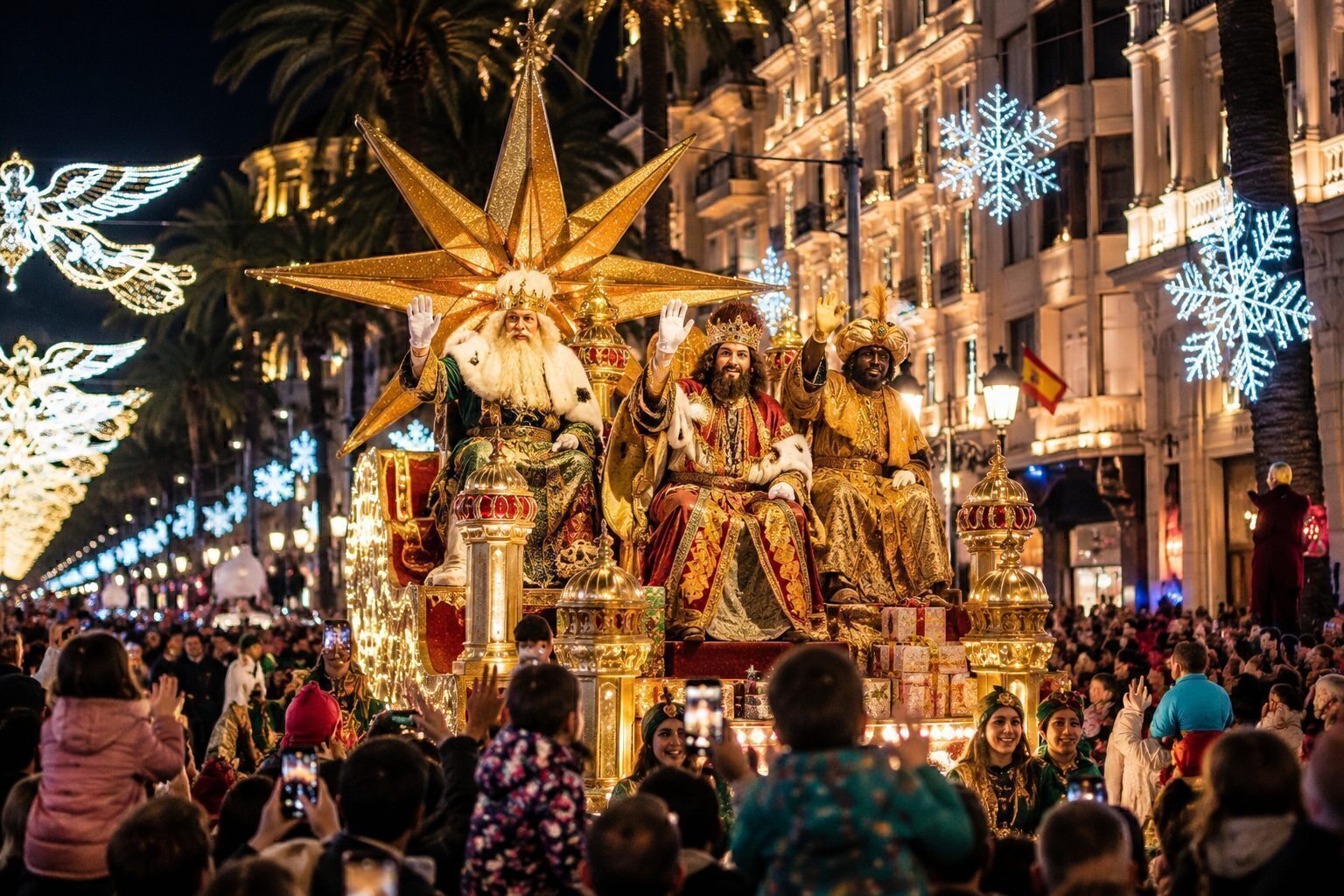
On the evening of 5 January, towns and cities throughout Spain host colorful parades known as Cabalgatas.
The Three Kings arrive accompanied by musicians, dancers, and floats, throwing sweets to children lining the streets.
These parades are among the most eagerly awaited events of the year and attract families of all ages.
Gifts on 6 January
Children wake up on the morning of 6 January to discover presents left by the Three Kings, making this day the traditional equivalent of Christmas morning in Spain.
Families gather once again to enjoy lunch and share the famous Roscón de Reyes.
Christmas on the Costa del Sol
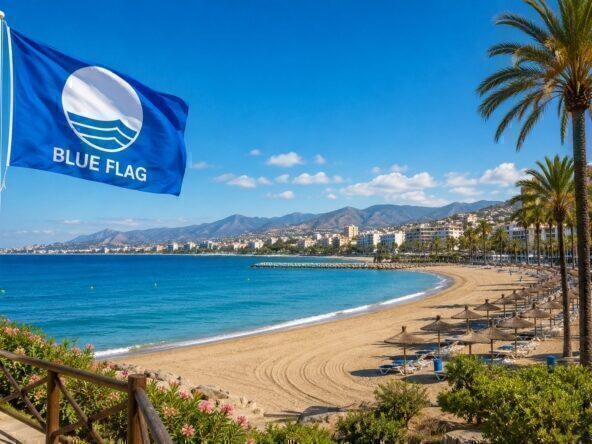
Christmas in Marbella, Estepona, Málaga, and San Pedro de Alcántara combines Spanish traditions with the region’s mild winter climate.
Residents and visitors enjoy:
- Spectacular Christmas lights.
- Christmas markets.
- Outdoor concerts and performances.
- Ice-skating rinks.
- Festive events and charity activities.
- The Three Kings parades.
- Outdoor dining under sunny skies.
It is not unusual to see people enjoying lunch on terraces in December while temperatures remain comfortably mild.
A Season Built Around Family and Community
Above all, Christmas in Spain is about spending time with loved ones.
Meals are long and leisurely, traditions are passed from generation to generation, and communities come together to celebrate.
Whether it’s sharing seafood on Christmas Eve, eating twelve grapes at midnight, or watching the Three Kings parade with children and grandchildren, the festive season is full of moments that create lasting memories.
Why Christmas in Spain Is So Special
Spain’s Christmas traditions blend religion, culture, gastronomy, and family values in a way that is both joyful and deeply rooted in history.
And on the Costa del Sol, where festive lights meet palm trees and sunshine, Christmas takes on a uniquely Mediterranean character.
For many international residents, what begins as a holiday experience soon becomes one of the reasons they fall in love with life in Spain—and one more reason why the Costa del Sol feels like home all year round.