Buying a Property on the Costa del Sol: A Complete Guide for International Buyers
The Costa del Sol remains one of Europe’s most sought-after destinations for international property buyers. With more than 300 days of sunshine each year, excellent infrastructure, and a lifestyle that blends beaches, golf, gastronomy, and modern amenities, the region attracts buyers from around the world. Whether you are searching for a holiday home, relocating permanently, or investing in Spanish real estate, understanding the buying process is essential. Fortunately, purchasing property in Spain is relatively straightforward when you have the right guidance.
Why Buy Property on the Costa del Sol?
Stretching from Málaga to Marbella, Estepona, Benahavís, and Sotogrande, the Costa del Sol offers an impressive variety of homes, including apartments, townhouses, villas, and luxury estates. As a result, buyers from Europe, North America, and the Middle East continue to choose southern Spain for its exceptional quality of life, strong rental market, and long-term investment potential.
Step 1: Define Your Budget
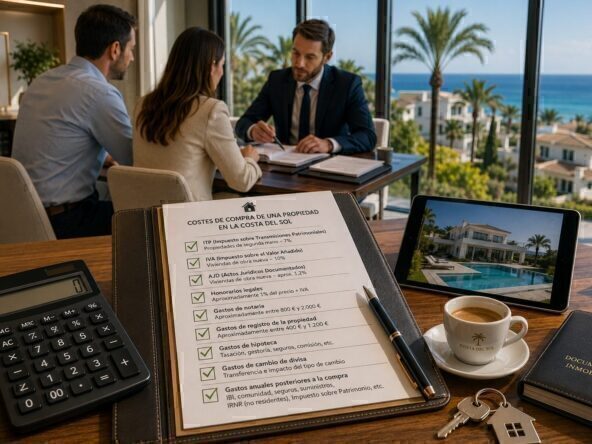
Before you start your property search, it is important to establish a realistic budget. In addition to the purchase price, buyers should allow for acquisition costs, which typically range between 8% and 13% of the property’s value, depending on whether the property is new or resale.
These costs may include:
- Transfer Tax (ITP) for resale properties
- VAT (IVA) and Stamp Duty (AJD) for new-build homes
- Notary fees
- Land Registry fees
- Legal fees
- Mortgage-related expenses, if financing is required
By planning ahead, you can avoid unexpected costs later in the process.
Step 2: Obtain an NIE Number
Foreign buyers must obtain an NIE (Número de Identificación de Extranjero), which serves as a tax identification number in Spain. You will need an NIE to:
- Purchase property
- Sign the title deeds
- Pay taxes
- Open a bank account
- Set up utility contracts
Fortunately, you can obtain an NIE either in Spain or through a Spanish consulate in your home country.
Step 3: Open a Spanish Bank Account
Although opening a Spanish bank account is not legally required, it will make managing your property much easier. For example, you can use it to:
- Pay purchase – related expenses
- Set up direct debits for utilities and community fees
- Manage mortgage repayments
- Pay annual taxes
Most banks will require:
- A valid passport or ID
- Proof of address
- An NIE number
- Proof of income or source of funds
Step 4: Appoint an Independent Property Lawyer
One of the most important steps when buying property on the Costa del Sol is choosing an experienced independent lawyer who specializes in Spanish property law. Your lawyer represents your interests and carries out the necessary legal checks before completion.
Typically, your lawyer will verify:
- Ownership and title deeds
- Outstanding debts or mortgages
- Building licenses and planning permissions
- Property legality and compliance
- Community fees and local taxes
Legal fees generally amount to around 1% of the purchase price, plus VAT. Therefore, professional legal advice provides valuable protection throughout the transaction.
Step 5: Reserve the Property
Once you find the right property, the next step is signing a reservation agreement and paying a reservation deposit. In most cases, deposits range from €3,000 to €10,000. This agreement removes the property from the market while your lawyer completes the due diligence process.
Step 6: Sign the Private Purchase Contract
After the legal checks have been completed, both parties sign a private purchase contract, known as the Contrato de Arras. At this stage, buyers usually pay around 10% of the purchase price. The contract includes:
- Buyer and seller details
- Property description
- Purchase price
- Completion date
- Terms and conditions
If the buyer withdraws without legal justification, the deposit is normally forfeited. Conversely, if the seller withdraws, they are usually required to return double the amount received.
Step 7: Arrange Mortgage Financing
If you require financing, it is advisable to begin the mortgage application process as early as possible. Spanish banks regularly offer mortgages to non-residents, although lending levels are generally lower than those available to residents. Banks typically request:
- Passport
- NIE number
- Tax returns
- Proof of income
- Bank statements
- Employment or business information
Since mortgage approval can take several weeks, early preparation is essential.
Step 8: Complete the Purchase Before a Notary
The final stage of the transaction takes place before a Spanish notary, where the public title deed (Escritura Pública) is signed. At completion:
- The remaining balance is paid
- Ownership transfers to the buyer
- The keys are handed over
- The sale becomes official
Step 9: Register the Property and Pay Taxes
Following completion, your lawyer will handle the post-sale formalities. These include:
- Registering the title deed with the Land Registry
- Paying the relevant taxes
- Transferring utility contracts
- Updating community fee records
- Arranging local tax payments
Documents Required to Buy Property in Spain
International buyers should prepare the following documents:
- Valid passport or ID card
- NIE number
- Proof of address
- Bank statements
- Proof of income or source of funds
- Tax returns (if applying for a mortgage)
- Marriage certificate, if applicable
- Power of Attorney (optional)
Having these documents ready can help speed up the process.
Can Non-Residents Buy Property in Spain?
Yes. Spain places no restrictions on foreign buyers, and non-residents can purchase property freely. Furthermore, many international buyers complete the entire process remotely by granting Power of Attorney to their lawyer.
Why Professional Advice Matters
Buying property on the Costa del Sol is generally a safe and transparent process. However, professional guidance can help ensure that everything proceeds smoothly. By working with experienced estate agents, independent lawyers, mortgage brokers, and tax advisers, you can protect your investment and avoid costly mistakes. Whether you are searching for a luxury villa in Marbella, a golf property in Benahavís, or a beachfront apartment in Estepona, expert support can make the entire process simpler and more secure.
Final Thoughts
The Costa del Sol continues to attract property buyers from around the world thanks to its exceptional climate, relaxed lifestyle, and excellent investment opportunities. Above all, understanding the buying process and building the right professional team will help make your purchase straightforward and stress-free. If you are considering buying a property on the Costa del Sol, seeking professional legal and financial advice from the outset will give you confidence and help ensure a successful purchase.